tips

Looking for tips and advice to take your running to the next level? Check out the tag session “Tips” on RunningWithJoe.com. This section of the blog is dedicated to sharing practical, actionable tips for runners of all levels, from beginners to experienced athletes. Whether you’re looking for advice on training, nutrition, injury prevention, or gear, you’ll find a wealth of information in this valuable resource. Browse the “Tips” tag session to discover new insights and strategies to help you achieve your running goals.

Cool Down for Runners

Cooling down after a run is just as important as warming up before. This routine helps to gradually bring your heart rate back to normal, prevent blood from pooling in your legs, and reduce muscle soreness and stiffness. In this article, we’ll explore the importance of a proper cool down for runners and provide tips on how to incorporate it into your post-run routine.

Injury Prevention

Cooling down after a run is an important step in injury prevention. By gradually slowing down the body and allowing it to return to its resting state, runners can reduce the risk of muscle soreness, stiffness, and other common injuries. This short period of time can also help the body to recover faster and be better prepared for the next workout. Understanding the benefits of cool down and incorporating it into your routine can help you run smarter, stronger, and injury-free.

Improved circulation

During a run, the heart rate increases and the blood flow is directed towards the working muscles. By gradually slowing down the pace and transitioning to a cool-down walk or stretch, the blood circulation returns to normal. This helps in reducing the risk of muscle soreness, stiffness, and also prevents blood from pooling in the legs. Improved circulation also helps in transporting oxygen and nutrients to the muscles, which aids in the recovery process. Incorporating a cool-down routine after every run can lead to better health and performance in the long run.

Better recovery

Cooling down after a run is an important part of the recovery process for runners. By gradually reducing the intensity of your workout, you allow your heart rate and breathing to return to normal, reducing the risk of blood pooling in your legs and minimizing muscle stiffness. In addition, stretching during the cool down period can help to increase flexibility and range of motion, which is essential for preventing injury and reducing the risk of muscle soreness. Taking proper time for a cool down helps runners prepare their bodies for the next workout and perform better.

Increased flexibility

One of the benefits of a proper cool down after a run is increased flexibility. By taking the time to stretch and move through a full range of motion, runners can help to reduce muscle stiffness and soreness, which can lead to improved flexibility over time. This increased flexibility not only helps with injury prevention, but it can also improve overall performance by allowing runners to move more freely and efficiently during their runs. Incorporating a cool down routine that includes stretching and light movement can help to keep muscles limber and reduce the risk of injury, making it an important part of any runner’s training regimen.

Reduced stress

It can also help reduce stress and tension in the muscles. By slowing down and gradually bringing the heart rate back to its resting state, the body has a chance to release any built-up stress and tension. This can help prevent muscle soreness and stiffness, as well as improve overall recovery and reduce the risk of injury. Additionally, taking a few minutes to stretch and relax after a run can help calm the mind and reduce stress levels, leading to improved overall health and well-being.

A female runner hydrating and replenishing after a cool down workout, taking a moment to recover and refresh.
Cooling down after run is important

Cooling down after a run is an important aspect of recovery and injury prevention. It helps the body return to its pre-exercise state and provides a number of benefits, including improved circulation, increased flexibility, reduced stress, and faster recovery. To get the most out of your cool down, it’s important to follow a few simple tips. Start by walking or jogging at a slow pace to help bring your heart rate back down. Then, perform gentle stretching exercises to help release any tension in your muscles. Incorporating foam rolling or massage can also be effective in promoting recovery. Finally, be sure to hydrate and refuel with nutrient-rich food and drinks to support your body’s recovery process.

Cool Down for Runners Read More »

Warming Up for Running

Starting your run without a proper warm-up can lead to injury and decreased performance. That’s why it’s crucial to take a few minutes before every run to warm up your muscles and prepare your body for the workout ahead. In this blog post, we’ll be discussing the importance of warming up before running and sharing some effective warm-up exercises to help you get the most out of your runs. Whether you’re a seasoned runner or just starting out, these tips will help you stay injury-free and perform at your best.

Why warming up for running?

Warming up before running is important because it prepares your body for physical activity. By increasing blood flow and flexibility, you can reduce the risk of injury, improve performance, and enhance overall enjoyment during your run. A proper warm-up can also help you mentally prepare for your workout, allowing you to focus on your goals and enjoy the experience. Whether you’re a seasoned runner or just starting out, taking the time to warm up before each run is a crucial step in achieving your best performance.

Benefits of warm up for running

Benefits of warm up for running

Warming up before a run is crucial for preventing injury and improving performance. By increasing heart rate, blood flow and flexibility, warming up prepares the body for physical activity and helps reduce the risk of muscle strains, pulls and tears. Start your run strong by taking the time to warm up properly.

How to Warm Up before running

A proper warm-up routine before running can help you improve your performance, reduce your risk of injury, and make your runs feel more enjoyable. Here’s an example of a warm-up routine that you can follow:

  1. Dynamic Stretches: Start by doing a few dynamic stretches to loosen up your muscles. Examples include high knees, butt kicks, and leg swings.
  2. Brisk Walking or Jogging: Start with a slow jog or brisk walk for 5-10 minutes to increase your heart rate and get your blood flowing.
  3. Dynamic Stretches: Do another set of dynamic stretches, this time focusing on the specific muscles you’ll be using while running. Examples include walking lunges, hip circles, and leg swings.
  4. Strides: Run a few short, fast intervals at around 80-90% of your maximum effort to get your legs moving and your heart rate up. These intervals should last around 20-30 seconds each.
  5. Stretches: Finish your warm-up with a few static stretches, holding each stretch for around 30 seconds. Focus on stretching your hamstrings, quads, and calves.

Remember, a proper warm-up routine is essential for any type of running, whether it’s a casual jog or a more intense workout. Take the time to warm up properly, and you’ll be well on your way to having a great run.

Adding warming up to my weekly running training routine

If you’re training for a marathon, it’s important to have a structured plan in place. This will help you stay on track and reach your goals. To get a better understanding of what a marathon training plan looks like, check out my post on “Training for the Barcelona Marathon: My Weekly Training Plan.” This post provides a detailed look at the exercises, workouts, and running distances I’m focusing on each week as I prepare for the big race. By incorporating a mix of running, strength training, and stretching into your routine, you’ll be well on your way to a successful marathon finish.

Warming Up for Running Read More »

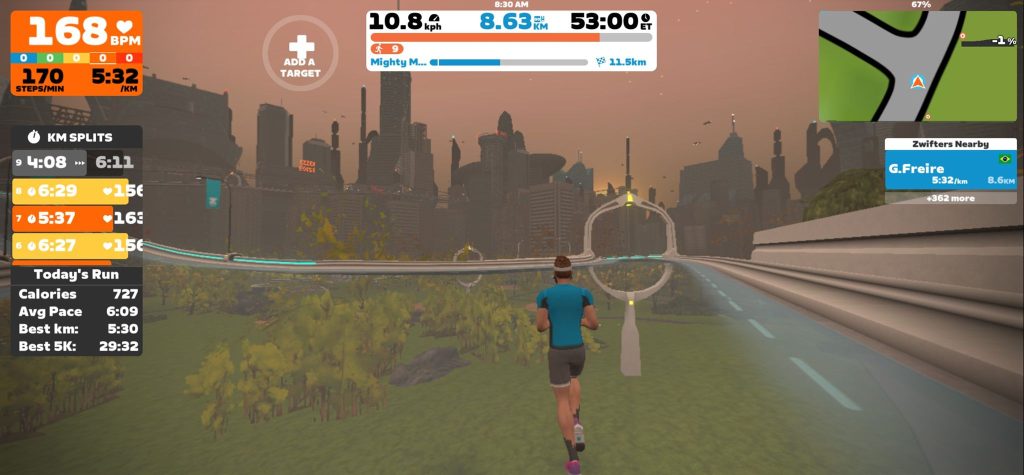
Maximizing Your Indoor Workouts with Zwift: How I’m Using it with Garmin Fenix 6 and Stryd for Accurate Treadmill Training

Winter has arrived in Barcelona and for many runners, this means that outdoor training can become a challenge. But, with the help of technology, you can still continue to train and stay motivated. I’ve recently started using Zwift on my indoor treadmill workouts and it’s been a game changer.

Training for the Barcelona Marathon on March 19th can be a challenge, especially during the winter months when running outside is not as appealing. That’s why I’ve been relying on the virtual training platform, Zwift, to help me stay on track with my training goals. By using Zwift three times a week on the gym’s treadmill, I can keep my body in peak condition and properly prepare for the marathon. With this training plan, I’m confident that I’ll be ready to tackle the Barcelona Marathon come race day.

Zwift is an online platform that allows you to run and ride in a virtual world alongside other athletes from all over the world. It’s perfect for those days when you can’t or don’t want to brave the elements for a run. The virtual environment provides a fun and interactive experience that helps to keep you engaged and motivated during your indoor training.

I’ve been using Zwift in combination with my Garmin Fenix 6 and Stryd to track my indoor runs. The Fenix 6 provides me with all the data I need, including my heart rate, pace, and distance. And, the Stryd gives me power and running efficiency data, which is especially useful when training on a treadmill. By using all three devices together, I’m able to get a complete and detailed picture of my indoor training sessions.

One thing to note about Zwift is that while it does require a subscription for cycling, you can use it for running for free. This is great for those who are looking to train on a treadmill and want a more interactive and engaging experience, without having to pay for a monthly fee. By using a compatible device such as a Garmin Fenix 6 and a power meter like the Stryd, you can track your progress and see real-time data on your performance. This allows you to accurately measure your progress and make adjustments to your training plan accordingly.

Overall, I’m extremely happy with my decision to start using Zwift for my indoor training. It’s a great way to stay motivated and continue to make progress, even when the weather outside isn’t ideal for running. Whether you’re a seasoned runner or just starting out, I highly recommend giving Zwift a try for your indoor training.

Step by step guide on how to use Zwift:

  1. Create an account: First, go to Zwift.com and sign up for an account. You will need to provide your basic personal information, such as your name, email address, and password.
  2. Download the software: Once you have created an account, you can download the Zwift software to your computer, tablet, or smartphone. The software is available for Windows, Mac, iOS, and Android.
  3. Connect your device: In order to use Zwift, you will need to connect a compatible device to your computer. I’m using the Garmin Fenix6 and a Stryd, but you can find a list of compatible devices on the Zwift website.
  4. Set up your profile: Once you have connected your device, you will need to set up your profile. This includes adding your weight, height, and other personal information. You can also customize your avatar, which will be your on-screen representation while you are using Zwift.
  5. Choose your workout: Zwift offers a variety of workouts, from short and sweet to long and intense. You can select a workout based on your goals, experience level, and the amount of time you have available.
  6. Start your ride: Once you have selected a workout, you are ready to start riding. You will be transported to a virtual world, where you can ride with other Zwift users from around the world.
  7. Monitor your progress: As you ride, Zwift will track your performance and give you feedback in real-time. You can see your speed, distance, and other metrics on your screen.
  8. Complete your workout: With Zwift, you’ll receive a comprehensive summary of your workout performance when you’re done. Use this data to monitor your progress and make any necessary adjustments to your training plan. Plus, Zwift seamlessly uploads your activity data to Strava or Garmin Connect.

With these steps, you should be able to start using Zwift and get the most out of your indoor training sessions. Whether you are a seasoned runner or just starting out, Zwift is a great tool for improving your performance and keeping your training on track.

Maximizing Your Indoor Workouts with Zwift: How I’m Using it with Garmin Fenix 6 and Stryd for Accurate Treadmill Training Read More »

Scroll to Top