Some links are affiliate links — I may earn a commission at no extra cost to you.
Spain Is an Underrated Running Destination
When most people picture a running trip to Europe, they think of Amsterdam’s flat canal paths or London’s Royal Parks. Spain rarely tops the list — and that is a genuine mistake.
Spain offers a combination that is hard to match: large, well-maintained urban parks, an outdoor-lifestyle culture where running in public is entirely normal, mild winters in the south, and some of the best urban marathons on the continent. Expats who settle here quickly discover they can run year-round with minimal disruption — they just have to learn the summer rules (more on that below).
The challenge for a new arrival is that the running infrastructure varies dramatically by city. Madrid’s setup looks nothing like Barcelona’s. Valencia is a different animal again. Seville and Málaga require a timing discipline during summer that most northern Europeans and Americans need to learn from scratch.
This guide covers the main expat hubs — Madrid, Barcelona, Valencia, and the southern cities — and gives you the factual lay of the land for each.
If you are still in the planning stages and thinking of actually moving here, our Portuguese-language sister site has a full Spain relocation guide at viajandosemrumo.com that covers visas, registration, and practical logistics.
Madrid
Altitude: approximately 650 m above sea level — the highest capital city in the European Union. First-timers often underestimate how noticeably this affects perceived effort, especially during the first two or three weeks after arriving from sea-level cities.
Summer heat: Madrid bakes from late June through September. July and August regularly reach 38–40 °C (100–104 °F) in the afternoon. Running during those months is perfectly viable, but it requires shifting your schedule firmly to early morning or after 9 p.m.
Parque del Retiro
The flagship park and the default reference point for every runner new to the city. The interior circuit around the main avenues comes to roughly 4.5 km; you can extend to about 6 km by weaving through secondary paths without repeating yourself. The terrain is essentially flat, the paths are wide, and the park is heavily used by runners on weekday mornings.
The main drawback is that Retiro is relatively compact — once settled, it tends to serve as a quick tempo venue rather than a long-run destination.
Casa de Campo
On the western edge of the central city, Casa de Campo is approximately five times the size of New York’s Central Park. The trail network covers around 17 km of marked paths through woodland, making it the natural choice for anyone who wants proper long-run distance without leaving Madrid’s urban boundaries. The terrain is hillier than Retiro, which makes it useful for runners building strength.
Madrid Río / Manzanares River
The riverfront linear park along the Manzanares is arguably the best infrastructure in the city for regular training. From the Matadero area to Casa de Campo, you can run a continuous 10 km with no traffic crossings, a completely flat surface, and water fountains placed at regular intervals. For tempo runs, progression runs, or simply stacking easy kilometres without worrying about logistics, Madrid Río is hard to beat.
Barcelona
Barcelona’s running scene looks very different from Madrid’s. The city is hemmed in by the sea to the east and the Collserola mountain ridge to the west, which produces two contrasting environments within a short distance of the city centre.
Carretera de les Aigües
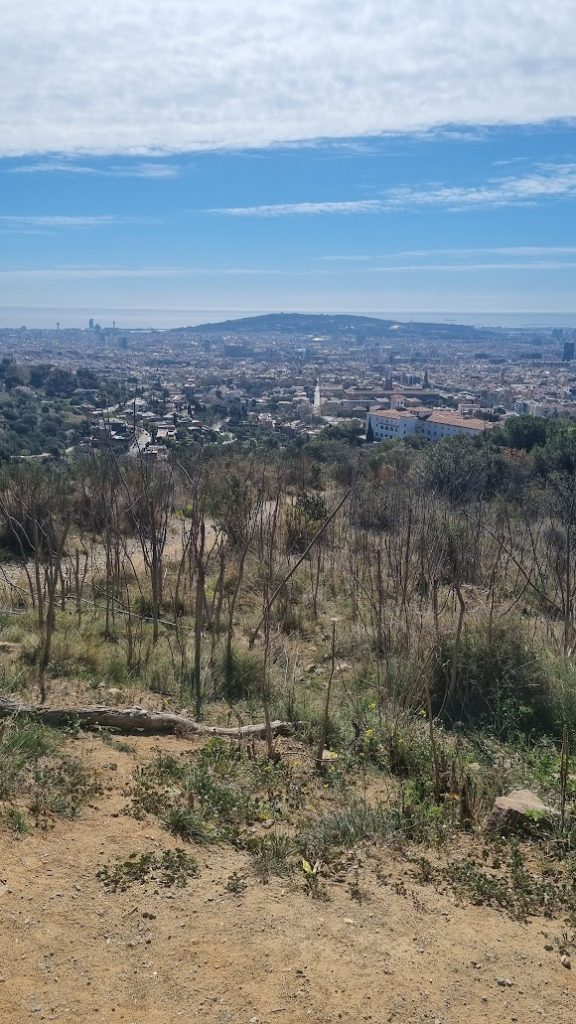
This is the trail that expat runners in Barcelona tend to become quietly evangelical about. Located in the Collserola Natural Park, the Carretera de les Aigües is a wide, mostly flat dirt road that runs along the flank of the mountain at a consistent elevation, spanning roughly 10 km end-to-end between Vallcarca and Esplugues de Llobregat.
What makes it remarkable for an off-road trail is how moderate it is. There are no technical climbs; the gradient barely fluctuates for long stretches. The surface is compacted dirt and gravel, dry and runnable for most of the year. And from the trail — level with the upper city — you have uninterrupted views down over the Barcelona skyline and, beyond it, the Mediterranean.
Access is straightforward: take the FGC S1 or S2 from Plaça Catalunya to Peu del Funicular, then the funicular up to the Carretera de les Aigües stop.
Montjuïc / Anella Olímpica
The hill of Montjuïc, south of the city centre, is where Barcelona held the 1992 Olympic athletics events. The Anella Olímpica complex sits near the summit, and the network of roads and paths around the hillside gives you genuine climb training without leaving the city. The road loop around the summit is roughly 5 km and fully car-accessible, so early-morning and late-evening runs work best.
Beachfront Promenade
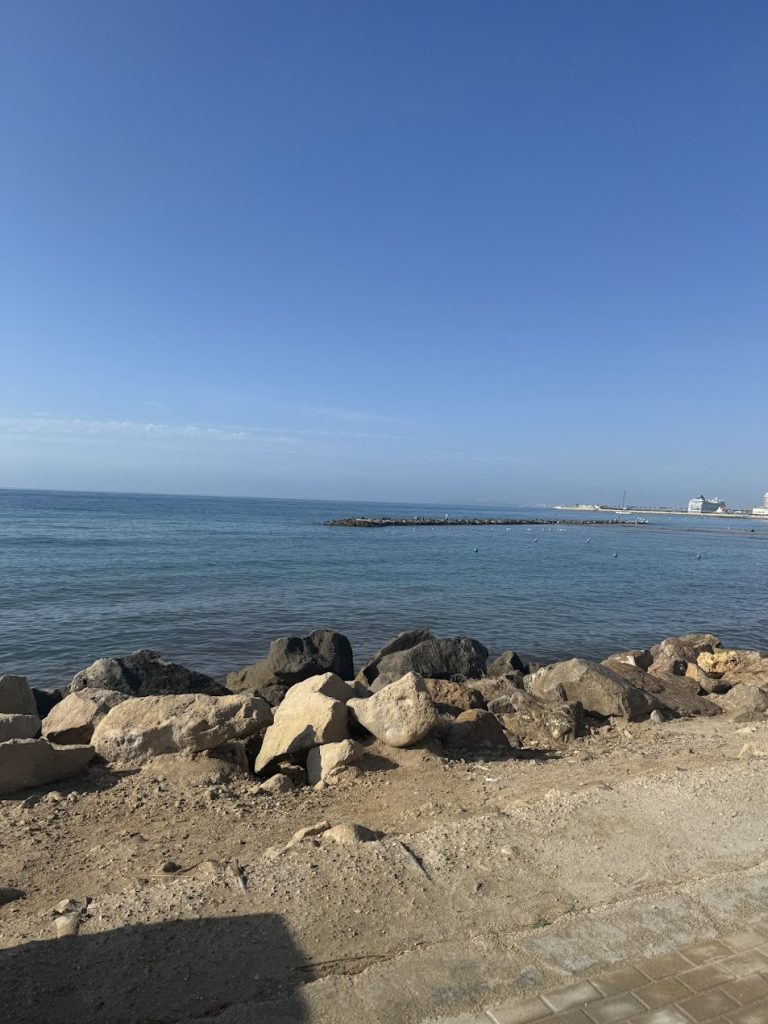
The waterfront promenade from Barceloneta north through Vila Olímpica and Poblenou is a flat, wide seafront path with consistent sea breeze. It gets crowded at weekends, so weekday mornings work best. Running north toward Fòrum takes you well past the tourist-heavy sections.
Valencia
For flat, fast, uninterrupted running, Valencia is the most practical city in Spain.
Jardín del Turia
The Jardín del Turia is the defining feature of Valencia’s running scene. After severe flooding in 1957, the Turia river was diverted around the city; the old riverbed was converted into a continuous linear park that threads directly through the urban fabric, connecting the western edge of the city to the sea.
The park stretches roughly 9 km end-to-end (with ongoing extensions that will bring it close to 10 km), has an average width of around 160 metres, and is entirely car-free. The surface alternates between tarmac paths and packed-earth tracks depending on the section. It passes under dozens of historic bridges, alongside the City of Arts and Sciences complex, and through planted gardens, sports areas, and children’s zones.
For running logistics, it is close to ideal: no crossings, negligible elevation change, easily segmented into 2–3 km loops or run end-to-end for a 9 km straight. Valencia sits at sea level, which is immediately noticeable if you are coming from Madrid.
Valencia also has a strong argument as Spain’s premier running city at the competitive level — the Valencia Marathon Trinidad Alfonso, held every December, has become one of Europe’s fastest marathon courses and regularly draws elite performances.
Seville and Málaga: Running the South
The southern cities are viable year-round only if you treat summer heat as a strict constraint rather than an inconvenience.
Seville — Guadalquivir River
Seville’s best running infrastructure runs along the Guadalquivir river. The Paseo de Juan Carlos I loop, which follows the riverbank, covers approximately 9.8 km and stays cool in the early morning due to the water proximity. The western bank north of the Puente de la Señorita has more developed running paths.
Seville is the hottest major city in Spain. Afternoon temperatures in July frequently exceed 42 °C. This is not the right context for experimenting with training schedules — runs start before 8 a.m. or not at all during June through September.
Málaga — Seafront Promenades
Málaga compensates for its summer heat with what is arguably the most extensive seafront running infrastructure on the Spanish mainland: nearly 25 km of connected promenades running along the Costa del Sol from the port area through Playa la Malagueta and beyond. The paths are wide, palm-lined, and largely flat.
The Mediterranean climate here is milder than Seville’s — Málaga’s summers are hot but not extreme, and the sea breeze makes early-morning and evening runs comfortable for most of the year.
Running the Spanish Heat: Practical Guidance
Summer in Spain requires adjusting how you run, not just when.
Timing. The golden rule is before 9 a.m. or after 9 p.m. in July and August across the whole country. In Madrid and Seville, even 9 a.m. can be 28–30 °C. In Valencia and Barcelona, coastal breezes extend the comfortable window slightly, but midday and afternoon running should still be avoided from June through early September.
Hydration. Spain has excellent municipal tap water, and most major parks have drinking fountains at regular intervals. Carry water on any run longer than 45 minutes. Start hydrated — thirst is a lagging indicator in serious heat.
Sun protection. A lightweight cap, sweat-resistant SPF 50 sunscreen on exposed skin, and UV-protective sunglasses are standard kit for summer running here. This is not a recommendation to consider; in July, it is simply required.
Footwear. Hot-weather running favours breathable, well-ventilated shoes over maximally cushioned performance trainers. Look for mesh uppers with genuine airflow rather than tight knit. For trail days on the Carretera de les Aigües or Casa de Campo, a light trail shoe handles the mixed surfaces better than road shoes. See my current picks for breathable hot-weather running shoes.
Tracking effort. In heat, perceived effort diverges from pace — heart rate becomes a more reliable training guide than speed. A GPS watch with heart rate monitoring is particularly useful for the first Spanish summer, when you are calibrating your effort baseline against the conditions. My current picks for GPS running watches span a few price brackets.
Expat Run Clubs and Races
Finding a Club
The most practical entry point for expat runners in any Spanish city is Strava. Most active local clubs run public Strava groups, and showing up for a group run is the fastest way to learn the best routes. Search city-specific names (“Madrid Runners,” “Running Barcelona,” “Valencia Runners Expats”) and filter for clubs with recent activity.
Parkrun
Spain currently does not have official parkrun events in the standard parkrun network. However, several cities have informal free weekly 5K events organized through Meetup and similar platforms — notably an unofficial “Turia Park Run” in Valencia and community groups in Madrid — that follow a similar format. Check current local listings, as the situation may change.
The Big City Marathons
Spain’s three major city marathons each have distinct characters:
- Valencia Marathon Trinidad Alfonso (December): Consistently one of Europe’s fastest courses, sea-level and flat. Has hosted multiple world record attempts. Registration fills quickly.
- Madrid Marathon (April): Runs through the city centre with varied terrain. The altitude affects finish times — factor in roughly 1–2% slower pacing compared to sea-level performance.
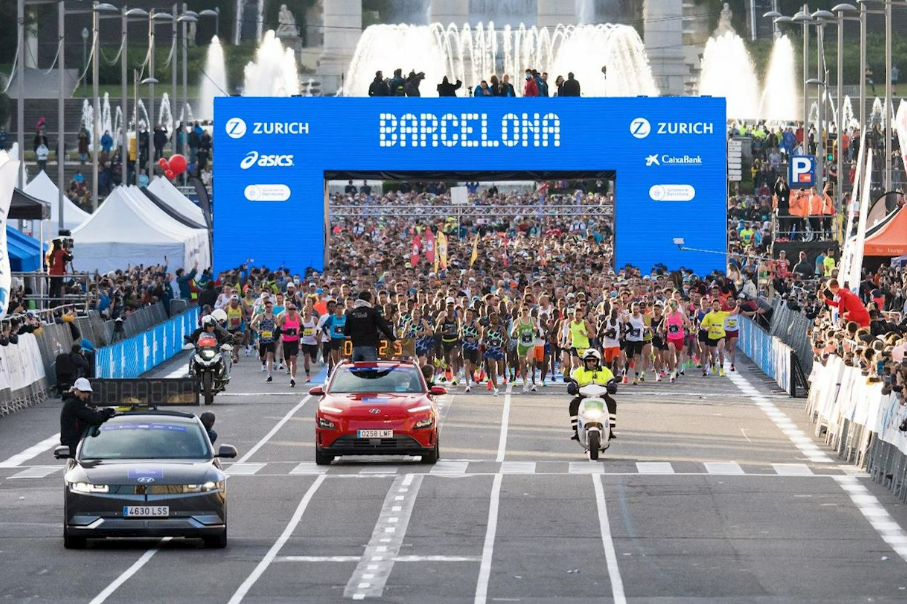
- Barcelona Marathon (March): A coastal city course with moderate elevation. Good first-marathon option due to favorable spring temperatures.
All three have solid international runner communities and English-language resources for registration.
FAQ
Where is the best place to run in Spain?
For runners who want flat, car-free routes through the city, Valencia’s Jardín del Turia is probably the most functional setup. For variety — trail options, seafront, and city parks within a short distance of each other — Barcelona is hard to beat. Madrid offers the largest parks and the best long-run infrastructure for high-mileage training.
Is it too hot to run in Spain?
For most of the year, no. From October through May, conditions across Spain are very comfortable for running. June through September requires adjusting your schedule to early mornings (before 9 a.m.) and avoiding afternoon running, particularly in inland cities like Madrid and Seville. Coastal cities like Barcelona, Valencia, and Málaga are more forgiving in summer due to sea breezes.
Are there parkruns in Spain?
Spain does not currently have official parkrun locations within the global parkrun network. Some cities have informal volunteer-organized free weekly 5Ks (notably an unofficial Turia Park Run in Valencia). Check local Meetup groups and Strava clubs for current organized running events in your city.
Which Spanish city is best for flat running routes?
Valencia is the clear answer. The Jardín del Turia provides around 9 km of completely flat, car-free running through the city at sea level. The terrain and conditions make it the most straightforward setup for tempo work, long runs, or consistent daily training without route-planning complications.
Final Thoughts
Spain rewards expat runners who take the time to learn their city’s specific setup. The parks are large, well-maintained, and embedded in a culture that treats outdoor exercise as entirely normal. The summer heat is real but manageable with the right schedule.
Whether you are tracking easy kilometres along the Turia, grinding up Montjuïc before the city wakes up, or picking a spring marathon as a first race abroad, the infrastructure is there. You just have to show up early enough.