When you start running, a watch is the one piece of tech that genuinely changes how you train. It turns “I went for a run” into real data — pace, distance, heart rate, progress over weeks. But the market is a mess of features you’ll never use and price tags that make no sense for a beginner.
After running for years and testing more watches than I’d like to admit, here’s the honest guide: what actually matters for a beginner, what to ignore, and how much to spend.
What a beginner actually needs (and what to ignore)
Forget the spec sheets for a second. As a new runner, only a handful of features change your training:
| Feature | Worth it for beginners? |
|---|---|
| Built-in GPS | Yes — accurate distance and pace without your phone |
| Heart rate (wrist) | Yes — train by effort, not just speed |
| Battery life | Yes — you don’t want to charge before every run |
| Basic workout tracking | Yes — log runs, see history |
| Maps / navigation | Not yet — nice, not essential |
| Training load / recovery scores | Later — useful once you run regularly |
| Music storage, payments | Convenience, not training |
The trap is paying for the advanced metrics. They’re great once you’re consistent — but on day one, GPS + heart rate + good battery covers 90% of the value.
GPS watch vs basic fitness tracker
A common beginner question: do I need a dedicated GPS running watch, or is a fitness band enough?
- Fitness bands count steps and estimate distance — fine for general activity, but the distance and pace on a run are often inaccurate.
- GPS running watches track your route with real satellite data, giving you trustworthy pace and distance. For running specifically, this is the difference-maker.
If running is your main goal, get something with built-in GPS. You’ll outgrow a basic band within weeks.
The two big ecosystems: Garmin vs Apple Watch
For most beginners, the choice comes down to two families.
Garmin
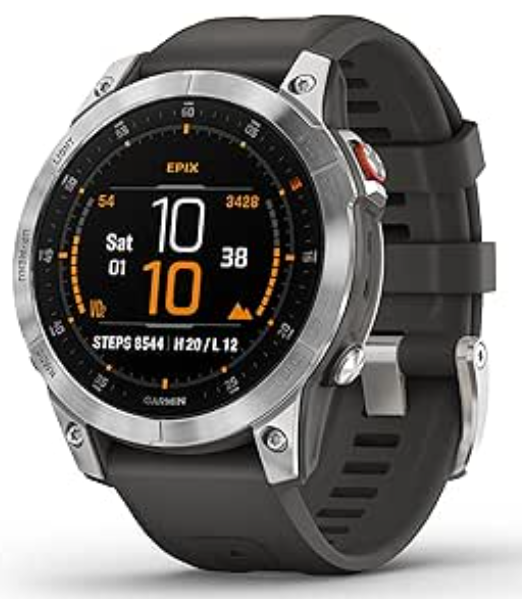
Garmin is the runner’s default for a reason: excellent GPS, long battery life (days, not hours), and running features that scale as you improve. Entry-level Garmin models give you everything a beginner needs and keep being useful as you train for longer distances. If running is the priority, Garmin is the safe bet.
Apple Watch
If you already live in the Apple world, the Apple Watch is a brilliant all-rounder — great for running, plus everything else a smartwatch does. The trade-off is battery life, which is measured in roughly a day rather than days, so charging discipline matters. For a runner who also wants one device for everything, it’s hard to beat.
We compared these two head-to-head for running in detail — see Garmin vs Apple Watch: which is best for running. If you’re leaning Apple’s top model, our Apple Watch Ultra review for runners goes deeper.
How much should a beginner spend?
You do not need a flagship watch to start. Here’s a sensible way to think about it:
- Entry level — a basic GPS running watch or last-gen model. Covers GPS, heart rate, and run logging. Perfect first watch.
- Mid range — adds better screens, longer battery, and early training-insight features. A great “buy once” if you suspect you’ll stick with running.
- Premium / flagship — multi-band GPS, maps, deep recovery metrics. Overkill for a beginner; revisit once you’re training seriously.
The honest advice: buy entry-to-mid range and run consistently for a few months first. You’ll learn what features you actually miss — and that’s when an upgrade makes sense.
Quick buying checklist
Before you buy your first running watch, make sure it has:
- ✅ Built-in GPS (not phone-dependent)
- ✅ Wrist heart rate
- ✅ Battery that lasts at least a week of normal running (or charging discipline if it’s an Apple Watch)
- ✅ A comfortable fit you’ll actually wear
- ✅ An app you find easy to read
If a watch ticks those, it’s enough to start. Everything else is a bonus.
The bottom line
Your first running watch doesn’t need to be expensive or complicated. GPS, heart rate, and good battery — that’s the foundation. Garmin is the runner-first choice; Apple Watch wins if you want one device for everything. Buy at the entry-to-mid level, run consistently, and upgrade only when you know what you’re missing.
The best running watch for a beginner isn’t the one with the most features. It’s the one you’ll actually wear, every run, for months.
Informational guide based on general product categories and running experience. Features and pricing vary by model and region — always check current specs before buying.