I rolled my left ankle inward on every single run for about three years before anyone told me the word “overpronation.” I thought my knees just hurt because I was getting older and heavier. Turns out my arches were collapsing on every footstrike, my whole lower leg was rotating in, and the cheap neutral trainers I kept buying were doing absolutely nothing to help. The day I finally got fitted into a proper pair of stability shoes, the dull ache behind my kneecap that I’d lived with for years was just… gone. Not better. Gone.
So when people ask me about running shoes for overpronation, I don’t treat it as a spec-sheet exercise. I’ve lived on both sides of this, I’ve run thousands of miles in stability trainers, and I’ve also learned (the slightly humbling way) that a lot of the old advice about “you NEED a rigid medial post or you’ll get injured” is more marketing than biomechanics. This guide is everything I’d tell a friend who just figured out their feet roll in.
Disclosure: This post contains affiliate links. If you buy through them I may earn a small commission at no extra cost to you. I only recommend shoes I’d actually lace up myself.
What Overpronation and Flat Feet Actually Are
Pronation is normal. When your foot lands, it’s supposed to roll slightly inward to absorb shock and spread the load. Your foot is a shock absorber, and that little inward roll is the spring doing its job. The problem isn’t pronation, it’s overpronation, where the foot rolls in too far, the arch flattens too much, and the ankle and lower leg follow it inward.
Flat feet (low or “fallen” arches) and overpronation usually travel together, but they’re not the same thing. You can have flat feet and a perfectly stable gait. You can also have a normal-looking arch and still pronate heavily under load. What matters for running is what your foot does dynamically, when your full bodyweight slams through it at a few times gravity, not what it looks like sitting still.
When overpronation becomes a problem, it tends to show up as:
- Inner knee pain (the classic one, and what got me)
- Shin splints along the inside of the shin
- Plantar fasciitis or arch ache
- Achilles and posterior tibial tendon soreness
- Shoes that wear out fast and lopsided on the inner edge
If none of that sounds like you, and you log happy miles in neutral shoes, you probably don’t need to overthink this. Stability shoes are a tool for a specific problem, not a moral upgrade.
How to Self-Diagnose at Home
You do not need a gait lab to get a useful first read. Two cheap tests get you most of the way.
The Wet-Foot Test
Wet the bottom of your foot, step onto a piece of brown paper or a dark dry concrete slab, and look at the print.
- Full footprint with little to no arch curve = low arch / flat foot. You’re more likely to overpronate.
- A clear curve where the arch is, connected by a band on the outside = normal/medium arch. Probably neutral.
- A thin band, almost like two separate pads (forefoot and heel) = high arch. You may actually underpronate (supinate), which is a different conversation, and stability shoes are usually the wrong call for you.
It’s a blunt instrument, but it’s a good gut check.
The Shoe Wear Pattern Test
Grab your most beaten-up pair of running shoes, set them on a table, and look at the soles from behind at eye level.
- Wear concentrated on the inner (medial) edge, especially forefoot, and shoes that visibly tilt inward when sitting flat = overpronation signal.
- Even wear across the middle or slightly to the outside = you’re probably fine.
- Heavy outer-edge wear = supination.
I find the wear pattern more honest than the wet test, because it reflects what your foot does moving under load, not standing in your bathroom. If both tests point inward, that’s a strong case for trying stability.
One more thing: if you’ve got real pain, recurring injury, or you’re coming back from something serious, the wet paper test is no substitute for a physical therapist or a proper gait analysis. Self-diagnosis is for shoe shopping, not for medical decisions.
Stability vs. Neutral: The Honest Modern Take
Here’s where I’m going to push back on the old gospel a little, because I think you deserve straight talk.
For decades the standard advice was rigid: overpronators get a firm medial post (a denser block of foam on the inner side of the midsole) to physically “stop” the foot from rolling. Heavy overpronators got full-blown motion-control shoes, which are basically planks. The theory was that controlling the motion prevented injury.
The research that’s piled up over the last decade has been… unconvincing about that. Multiple large studies have failed to show that matching shoes to arch type or pronation actually reduces injuries the way we assumed. A lot of runners do great in neutral shoes despite “needing” stability on paper. And the industry has quietly shifted: the newest “stability” shoes from Brooks, Hoka, and others have largely replaced rigid posts with smart, broad, cushioned platforms that guide the foot instead of fighting it. Brooks calls its version GuideRails. Hoka uses a wide base and J-Frame geometry. The trend is guidance through cushioning and geometry, not punishment through rigidity.
So my honest position:
- If you overpronate and have pain, stability shoes are a very reasonable thing to try, and they helped me enormously.
- But “stability” in 2026 mostly means a supportive, well-cushioned, wide-based shoe, not a brick. For most runners, cushioning and a stable platform matter more than an aggressive medial post.
- True rigid motion-control shoes are now a niche product for severe overpronation, often paired with orthotics, and most people reading this don’t need them.
- The best shoe is still the one that feels good and lets you run pain-free. If a neutral shoe does that for you, the wet-foot test doesn’t override your own legs.
Dogma is what kept me in the wrong shoes for years. Don’t replace one dogma with another.
The Best Running Shoes for Overpronation in 2026
These are the shoes I either run in, have run in, or consistently recommend to overpronating friends. I’ve leaned toward the modern “guided” stability shoes because they suit the widest range of people. If you want a broader look at one brand’s whole lineup, my On running shoes guide for 2026 goes deep on their range and where the stability picks fit.
| Shoe | Best For | Drop | Weight (approx, M) | Price Range |
|---|---|---|---|---|
| Brooks Adrenaline GTS 24 | Everyday stability, the safe default | 12mm | ~10.1 oz | $140–$150 |
| Hoka Arahi 7 | Max cushion + light, stealthy support | 5mm | ~9.3 oz | $145–$155 |
| On Cloudmonster (+ stability picks) | Springy, energetic daily miles | ~6mm | ~10.5 oz | $170–$180 |
| Asics GT-2000 13 | Plush traditional stability, value | 8mm | ~9.9 oz | $140–$150 |
| Saucony Tempus | Light, fast guided foam for tempo days | 8mm | ~8.5 oz | $160–$170 |
Prices and weights shift by season and colorway, so treat these as ballpark. Now the detail.
Brooks Adrenaline GTS 24 — The Default Everyone Should Try First
If a friend texted me “I overpronate, just tell me what to buy,” the answer is the Brooks Adrenaline GTS. It is the most universally safe stability shoe on the market and it’s the one that fixed my knee, so I’m biased and I’m fine with that.
The GTS (Go-To Support) line abandoned the old rigid medial post years ago in favor of GuideRails — raised foam bumpers on both sides of the heel that only engage when your knee or ankle drifts too far. The genius is that they do nothing when you’re tracking straight. They’re not fighting your stride, they’re catching it. It feels like a normal, smooth, slightly firm trainer until the moment you need support, and then it’s quietly there.
Pros:
- The most forgiving learning curve of any stability shoe. Almost no one hates it.
- GuideRails support without the locked-up feeling of old motion-control shoes.
- Bombproof durability, easily 400+ miles.
- Wide and extra-wide widths actually available, which matters a lot for flat feet.
Cons:
- That 12mm drop is high and old-school. If you prefer a low-drop, level feel, it’ll feel tippy at the heel.
- Not exciting. It’s a Honda Civic. Reliable, slightly boring.
- Heavier than the modern crop. Not the shoe for race day.
This is the one I tell beginners and high-mileage overpronators to start with. If it works, you may never need this article again.
Hoka Arahi 7 — Maximum Cushion, Minimal Bulk
The Hoka Arahi is my pick for runners who want the famous Hoka pillow underfoot but don’t want a tank. It’s genuinely impressive how Hoka delivers stability here, because there’s no obvious post at all. Instead they use a J-Frame — a firmer foam shaped like a J that wraps the heel and runs down the medial side, plus the wide, inherently stable Hoka base. The support comes from geometry, not a brick.
The result is one of the lightest stability shoes you can buy, with the kind of plush, rockered ride that makes long runs feel shorter. For flat-footed runners who associate “support shoe” with “stiff and heavy,” the Arahi is a revelation.
Pros:
- Light for a stability shoe (~9.3 oz), genuinely fast-feeling.
- Hoka cushioning with real support, great for high-mileage and bigger runners.
- Low 5mm drop suits people moving away from high-heel trainers.
- The rocker geometry rolls you forward nicely.
Cons:
- The support is subtler than the Adrenaline. Severe overpronators might want more.
- Hoka’s narrow standard fit can be tight for wide flat feet, so try the wide.
- Firmer than people expect from “Hoka cushion” marketing.
If you want plush and stable and light, the Arahi is hard to beat.
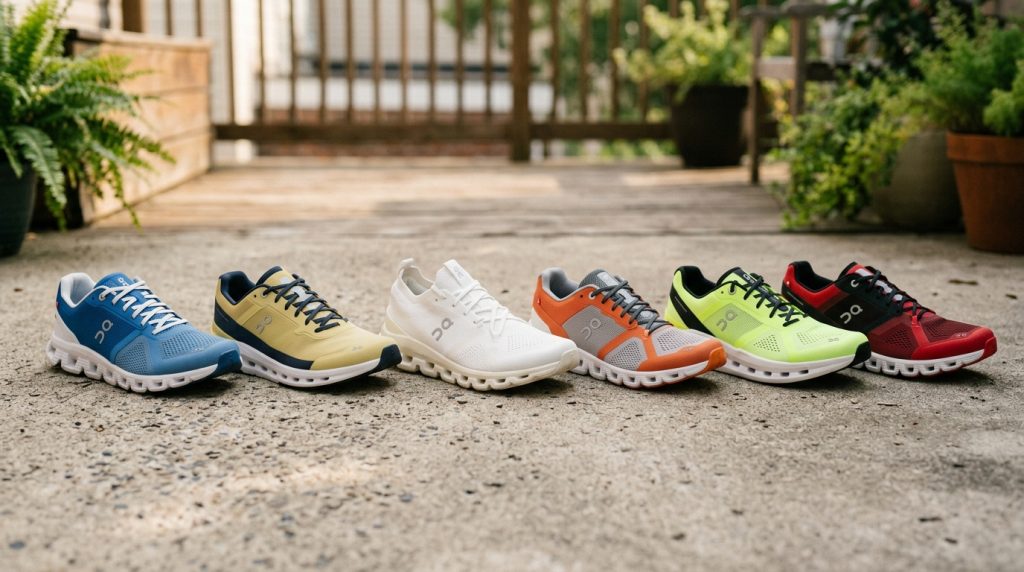
On Cloudmonster and On’s Stability Picks — For the Spring-Lovers
On gets pigeonholed as a lifestyle brand, but the running shoes have come a long way, and the ride is unlike anything else thanks to those CloudTec pods. The Cloudmonster isn’t a dedicated stability shoe, but its big, wide, energetic platform is more inherently stable than the thin Ons of old, and mild overpronators often do well in it, especially if they hated firm traditional support shoes.
For runners who specifically need guidance, On’s stability-oriented models build a supportive geometry into that same springy platform. The whole appeal here is energy return. These shoes feel lively in a way the Adrenaline and even the Arahi don’t.
Pros:
- Distinctive springy, propulsive ride. Fun to run in.
- Wide, modern platform offers real inherent stability for mild overpronators.
- Excellent build quality and a premium feel.
- Sharp looks, if you care about that.
Cons:
- The most expensive option here.
- Best for mild overpronation. Heavy overpronators need a dedicated support shoe.
- The pod system can pick up small stones and isn’t for everyone underfoot.
If you’ve found firm stability shoes joyless, On is where I’d send you to fall back in love with running. I break down the whole lineup in my On running shoes guide if you want to compare models.
Asics GT-2000 13 and Saucony Tempus — Two Strong Honorable Mentions
I can’t write an overpronation guide and ignore these two, because they earn their spots.
The Asics GT-2000 13 is the plush, traditional stability shoe done right and it’s usually a touch cheaper. Asics now uses LITETRUSS support geometry rather than a hard post, the cushioning is soft and welcoming, and it’s a fantastic value daily trainer. If the Adrenaline feels too firm for you, the GT-2000 is the obvious next stop.
The Saucony Tempus is the smart pick for overpronators who actually want to run fast. It sandwiches firmer support foam around a bouncy PEBA-based core, so you get a guided platform that’s also light and responsive. It’s the rare stability shoe you can genuinely do tempo work and intervals in without feeling like you’re dragging anchors. It’s not a beginner’s everyday cushion shoe, but for a faster runner who pronates, it’s brilliant.
You can browse current pricing and a wider field of stability running shoes here if you want to comparison-shop before committing.
How to Pick: A Quick Decision Guide
Don’t overthink it. Run through this:
- Do you actually have a problem? No pain, happy in neutral shoes? Stay there. Don’t fix what isn’t broken.
- Confirmed inward roll (wear pattern + wet test) and some pain? Start with the Brooks Adrenaline GTS. It’s the lowest-risk bet and the easiest to love.
- Want max cushion but light and rockered? Go Hoka Arahi.
- Hate firm traditional support shoes and want energy back? Try On, if your overpronation is mild.
- On a budget or want classic plush? Asics GT-2000.
- You’re a faster runner who pronates and wants speed days too? Saucony Tempus.
- Severe overpronation, recurring injury, or you wear orthotics? See a PT first, and look at true motion-control shoes or custom orthotic-compatible models. This is the one case where you shouldn’t shop off a blog post.
A few universal tips that matter more than the specific model: get fitted in the late afternoon when your feet are at their largest, leave a thumb’s width at the toe, and do not chase break-in periods. Modern shoes should feel good in the store. If they need “breaking in,” they’re wrong for your foot. And if you’re rotating in treadmill miles, the cushioning and stability needs are similar but slightly different, which I cover in my best treadmills for runners 2026 guide.
Frequently Asked Questions
Do I really need stability shoes if I overpronate?
Not necessarily. The honest answer from the current research is that matching shoes to your pronation doesn’t reliably prevent injuries, and plenty of overpronators run happily in neutral shoes. The real test is whether you have pain or recurring injury. If you do, stability shoes are absolutely worth trying, and modern ones support your foot gently rather than forcing it. If you’re pain-free, the wet-foot test alone isn’t a reason to switch.
What’s the difference between stability and motion-control shoes?
Stability shoes offer moderate guidance for mild-to-moderate overpronation, usually now through smart geometry and cushioning (like Brooks GuideRails or Hoka’s J-Frame) rather than a rigid post. Motion-control shoes are much firmer and more rigid, built for severe overpronation, often combined with orthotics. Most runners who pronate need stability, not motion control. Motion control is a specialist tool, and if you’re not sure which you need, you almost certainly want stability.
Can flat feet run in neutral shoes?
Yes, many do. Flat feet and overpronation aren’t identical, and what your foot does dynamically under load matters more than your static arch. If you have flat feet but a stable, pain-free gait, neutral shoes are fine, and a maximally cushioned neutral shoe can feel great. If your flat feet come with inward roll and joint pain, that’s when stability shoes earn their keep.
How often should I replace my running shoes?
Roughly every 300 to 500 miles, though it depends on the shoe, your weight, and your stride. For overpronators this matters more, not less, because once the foam and support structure pack out, the shoe stops guiding your foot and your old pains can creep back. A good tell: check the wear pattern. When the inner edge is visibly crushed and the shoe tilts inward on a flat table, it’s done, even if the upper looks fine.
Will stability shoes fix my knee or shin pain?
They helped mine enormously, but they’re one piece of the puzzle, not a cure. Overpronation-related pain also responds to strengthening your hips, glutes, and feet, sensible mileage progression, and sometimes orthotics. If the right shoes don’t resolve your pain within a few weeks, see a physical therapist. Shoes can reduce the load, but they can’t out-cushion weak hips or a training spike.
Are expensive running shoes worth it for overpronation?
Up to a point. The sweet spot for stability shoes is the $140 to $180 range, where you get proven support tech and durable foam. Above that you’re mostly paying for premium materials and race-oriented features that overpronators don’t specifically need. The Asics GT-2000 proves you can get excellent guided support at the lower end of that range. Buy the shoe that fits and feels right, not the priciest one on the wall.
The Bottom Line
If you overpronate and you’re in pain, the single best move you can make is to try a proper guided stability shoe, and the Brooks Adrenaline GTS is the safest place to start. If you want it lighter and plusher, the Hoka Arahi. If you’ve been burned by stiff support shoes and want some life back, On. But carry this with you: stability in 2026 is about gentle guidance and good cushioning, not rigid correction, and the right shoe is ultimately the one that lets you run without pain. Trust your legs over the wet-foot test. Mine spent three years telling me something the spec sheet never could.
Lace up, start easy, and let your feet vote.